
Hiragana Letters and How to Write Them (Complete Guide)
Welcome to the first step in Japanese. If you ask, "Where should I start?", the answer is hiragana.
Hiragana (ひらがな) is the main phonetic script of Japanese. Unlike the stiff Latin alphabet, it is full of smooth, elegant curves. You need hiragana to read textbooks, children's manga, and basic Japanese grammar.
This article does more than list the letters. It teaches stroke order so your writing looks natural and clean—not like chicken scratch.
1. What Is Hiragana?
Hiragana has 46 basic characters. Each character stands for one syllable (such as 'ka', 'mu', 'to'), except the plain vowels (a, i, u, e, o) and the nasal 'n'.
A Short History: "Women's Writing"
Did you know hiragana was once called Onna-de (女手), or "women's writing"? In the Heian period (794–1185), men preferred Chinese-derived kanji, seen as more masculine and scholarly. Court women, including the author Murasaki Shikibu, developed simpler cursive forms of kanji for poetry and novels. That became hiragana.
That is why hiragana curves and flows, while katakana looks sharper.
When Is Hiragana Used?
- Okurigana: Verb and adjective endings. (Example: 食べます — tabemasu).
- Particles: Grammar helpers (wa, ga, o, ni, de).
- Native Japanese words: Words without a common kanji spelling.
- Furigana: Small reading aids written above difficult kanji.
2. Three Essential Stroke Techniques
Before you pick up a pen, learn three stroke endings used in Japanese calligraphy. They are what separate beginner writing from clean writing.
- Tome (stop): The pen fully stops at the end of the stroke, then lifts. The tip looks blunt.
- Example: The first horizontal line of ki (き).
- Hane (hook): At the end of a stroke, make a small flick toward the next stroke.
- Example: The bottom of i (い) or ha (は).
- Harai (sweep): Lift the pen gradually while still pulling the line so the tip tapers like a broom tail.
- Example: The right leg of hito (人) or the curve of no (の).
3. Hiragana Letters and How to Write Them
Here is a visual guide to writing the 46 basic hiragana letters.
Row A (Vowels)
The basic Japanese vowels are A, I, U, E, O.
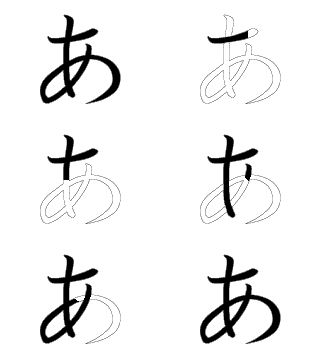
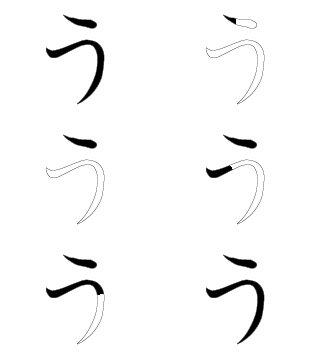
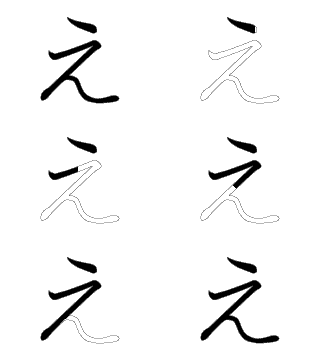
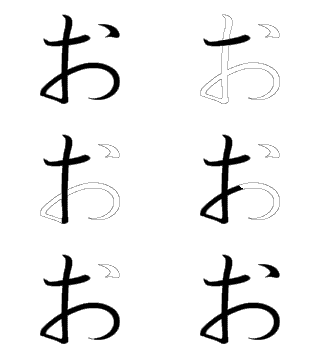
- A (あ): Looks like an apple with a stem.
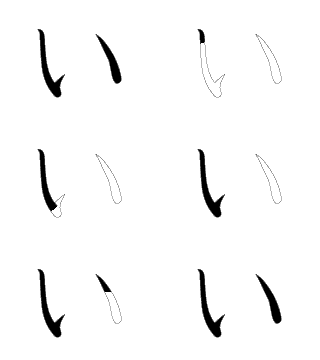
- I (い): Like two eels facing each other. Do not forget the hane (hook) on the first stroke!
Row KA (K-series)
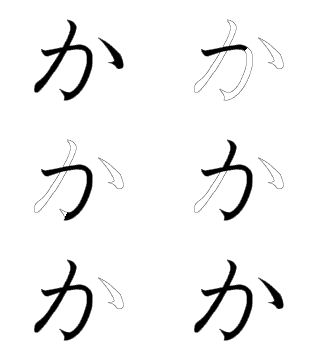
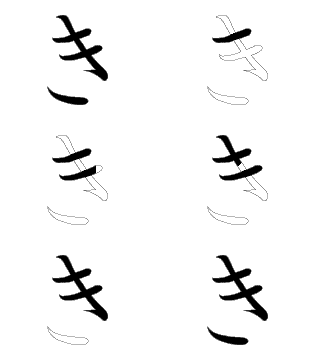
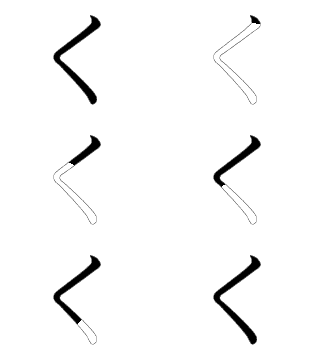
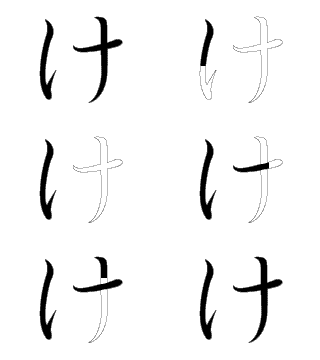
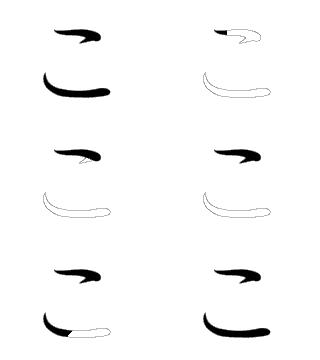
- Ki (き): The bottom part is separate from the horizontal lines (computer fonts often connect them; handwriting should keep them apart).
Row SA (S-series)
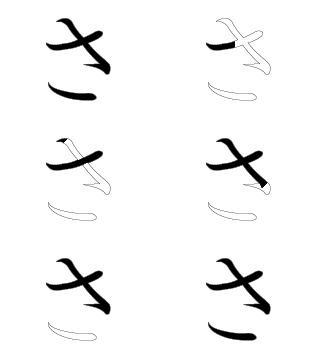
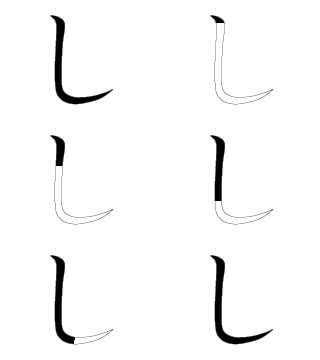
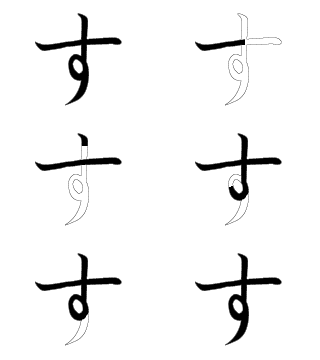
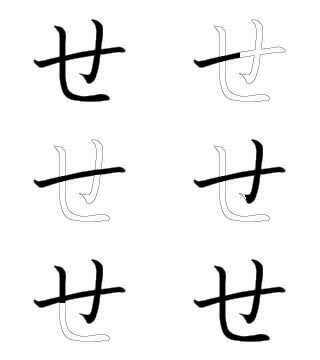
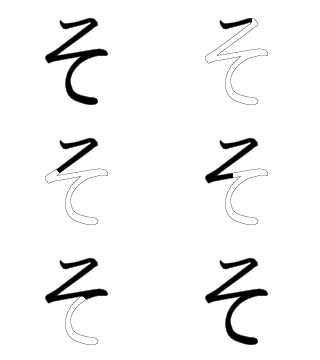
- Shi (し): Shaped like a fishing hook. Very easy!
- So (そ): Often hard to balance. Start with a small Z shape, then connect a C underneath.
Row TA (T-series)
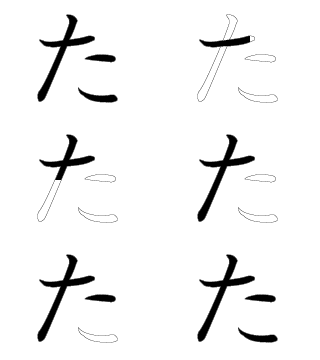
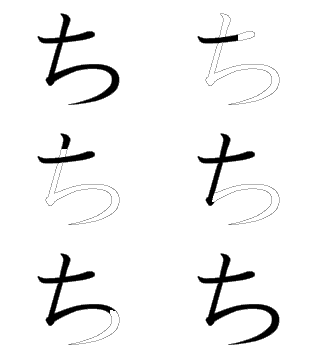
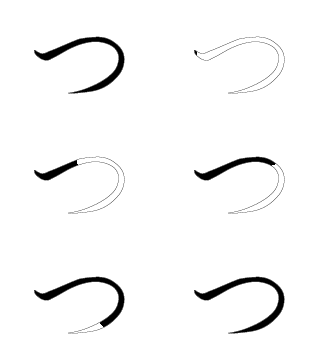
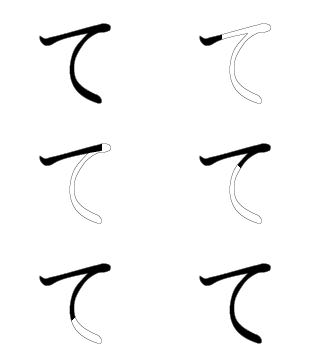
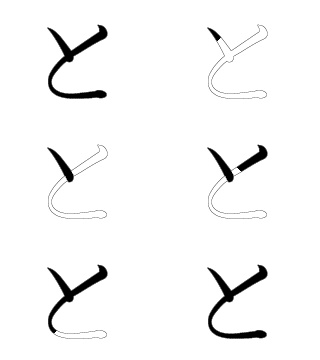
- Chi (ち): Like a number 5 turned around.
- Tsu (つ): Like a big tsunami wave.
Row NA (N-series)
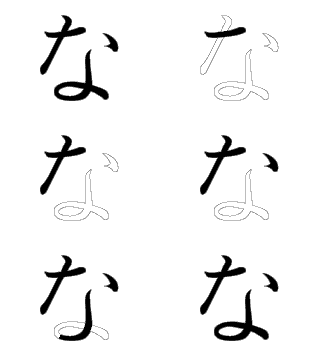
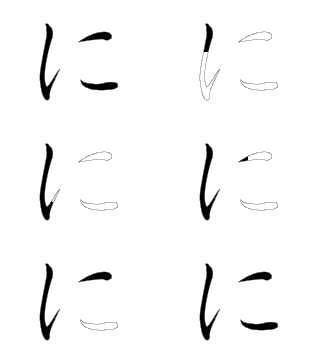
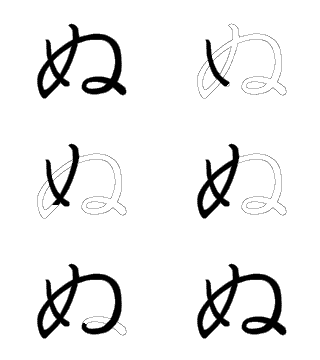
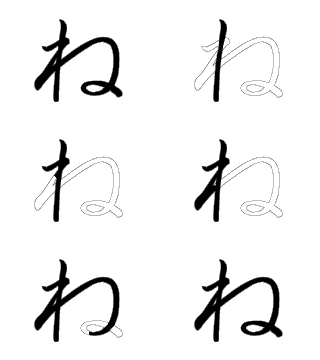
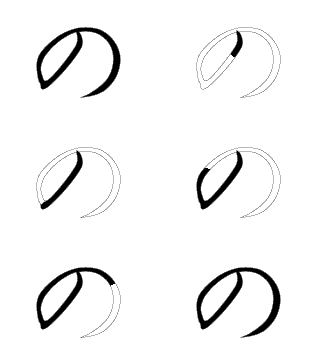
- Watch out: Nu (ぬ) and Ne (ね) both end with a looping "pretzel" tail. Nu loops lower; Ne loops at the end.
Row HA (H-series)
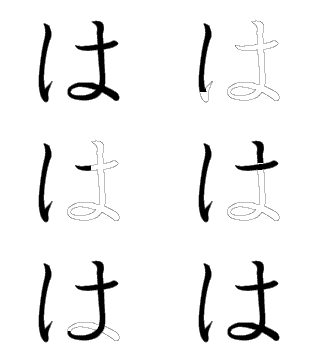
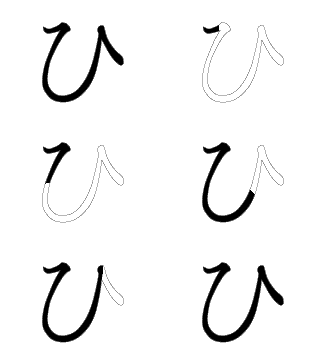
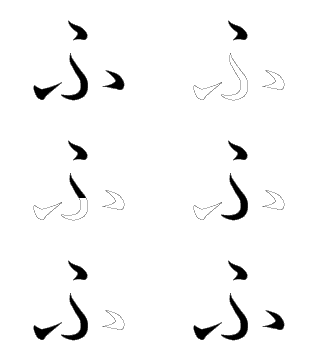
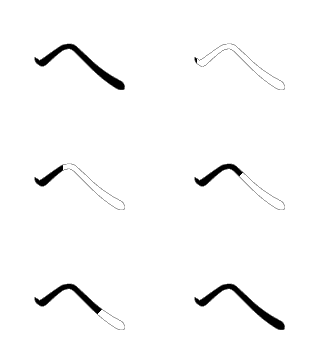
- Fu (ふ): The most "artistic" letter. A center point with two side dots like wings.
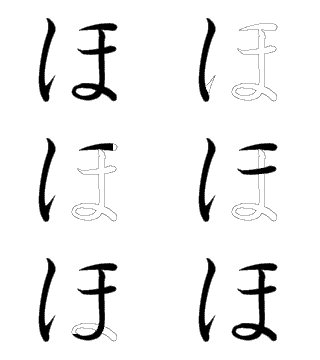
- Ha (は) vs Ho (ほ): Ho has a top horizontal line, and its vertical line does not poke above.
Row MA (M-series)
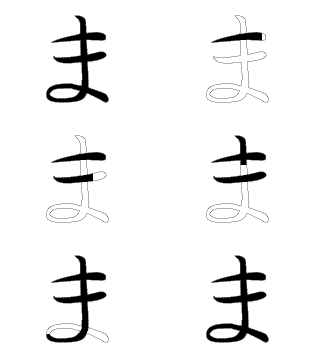
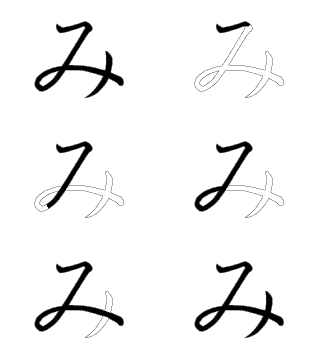
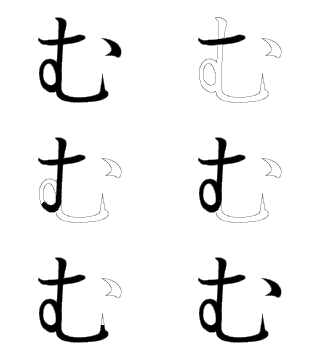
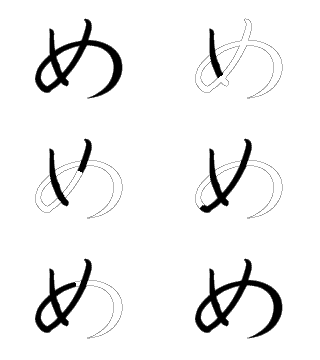
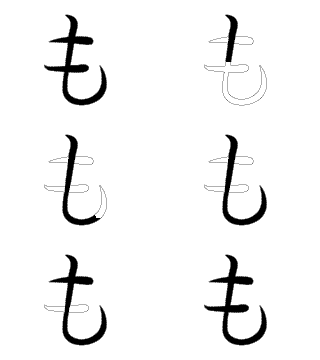
- Mu (む): Like a cow (moo). There is a small circle in the middle.
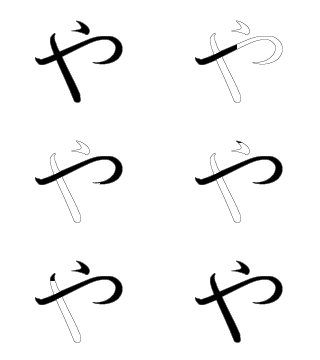
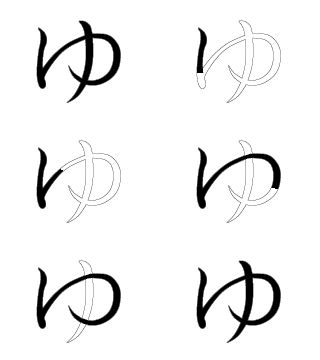
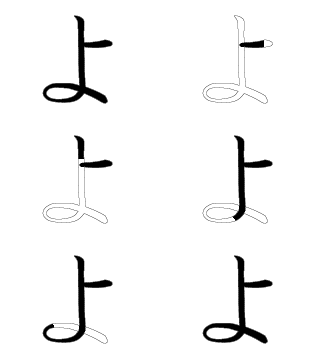
Row YA (Y-series)
Only three letters: Ya, Yu, Yo.
Row RA (R-series)
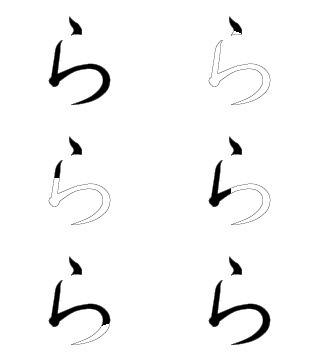
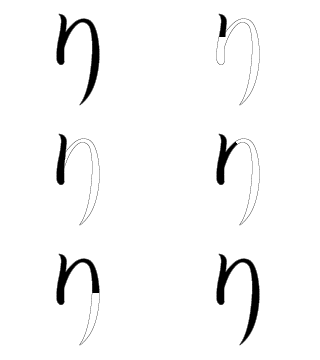
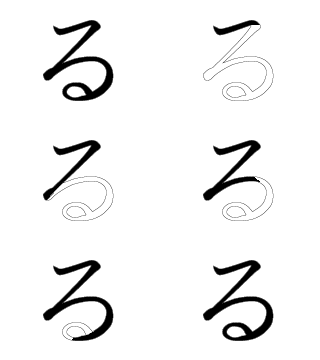
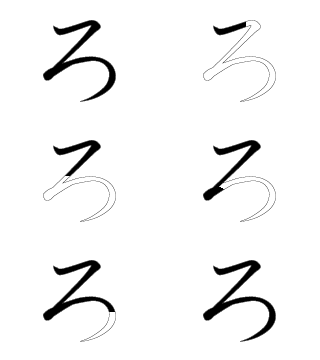
- Watch out: Ru (る) has a loop at the tip; Ro (ろ) does not (plain).
Row WA & N
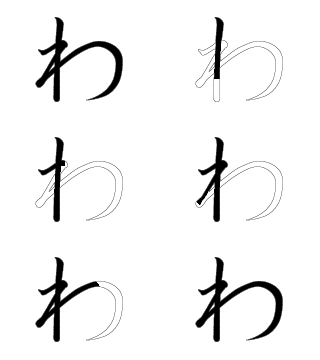
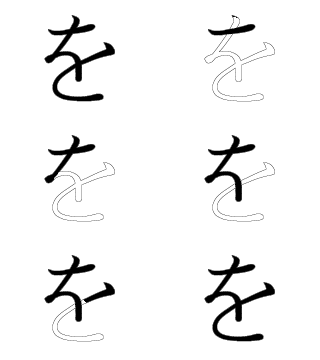
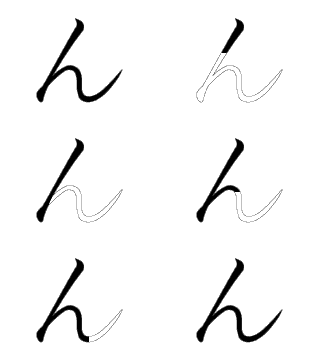
- Wo (を): Often called the particle "o". The most complex shape—extra practice helps.
- N (ん): The only consonant-only letter. Like a slanted Latin n.
Extra Letters (Archaic: Wi & We)
There are two more hiragana letters now treated as obsolete: Wi (ゐ) and We (ゑ).
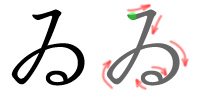
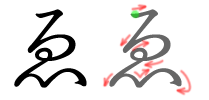
Since the 1946 spelling reform, these two are no longer used in daily life.
- For modern WI, write: うぃ (u + small i).
- For modern WE, write: うぇ (u + small e).
4. Look-Alike Letters
Be careful—many hiragana look like twins.
-
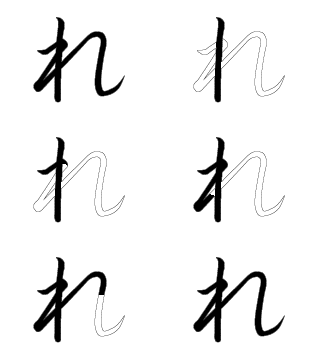
Re (れ) vs Ne (ね) vs Wa (わ)
- All start with a left vertical line and a zigzag on the right.
- Re (れ): The tip curves outward (like a dog's tail).
- Ne (ね): The tip loops round (pretzel).
- Wa (わ): The tip rounds inward (like a full belly).
-
Nu (ぬ) vs Me (め)
- Nu (ぬ): Has a pretzel loop in the tail.
- Me (め): No loop—ends with a free harai sweep.
-
Ha (は) vs Ho (ほ)
- Ha (は): The vertical line sticks up through the top. Only one horizontal line.
- Ho (ほ): The vertical line does not stick up. There are two horizontal lines (and the top is closed).
5. Sound Variations (Dakuten, Handakuten, Yōon)
Once you know the 46 basics, the rest is modification.
Dakuten (Quote Marks)
Add two small marks at the top right (゛) to "thicken" or voice the sound.
- K → G (Ka か → Ga が)
- S → Z (Sa さ → Za ざ)
- T → D (Ta た → Da だ)
- H → B (Ha は → Ba ば)
Handakuten (Small Circle)
Add a small circle (゜) only on the H row to make P.
- H → P (Ha は → Pa ぱ)
Yōon (Contracted Sounds)
Combine an -i ending letter (Ki, Shi, Chi, Ni, Hi, Mi, Ri) with small Ya/Yu/Yo (ゃ, ゅ, ょ).
- Ki + small ya = Kya (きゃ)
- Shi + small yo = Sho (しょ)
- Ri + small yu = Ryu (りゅ)
6. Interactive Practice
Try the interactive practice below. Use it to train reading and writing hiragana.
You can also open kana practice in Labs: Hiragana/Katakana practice.
7. A 14-Day Practice Plan (For Consistent Writing)
Many beginners can "recognize" hiragana but still write unevenly. Use this 14-day plan for more consistent strokes:
- Days 1–4: focus on base groups (
a,ka,sa,ta). - Days 5–8: middle groups (
na,ha,ma,ya). - Days 9–11: finish remaining groups (
ra,wa,n) + dakuten. - Days 12–14: mixed practice with short words and sentences.
Simple rules:
- Write slowly with correct stroke order.
- Say the sound while writing.
- Recheck letters you often mix up.
- Repeat 10–15 minutes every day without skipping.
Progress is not about speed. It is about consistent shape. Stick with the plan for 14 days and your writing usually looks much steadier.
Closing
Do not rush. Hiragana is the foundation. If that foundation is shaky, the rest of Japanese is harder later. Take grid paper and write each letter while saying its sound. Enjoy every stroke.
When the letters feel familiar, continue with Learn Katakana to build the rest of your reading and writing base.
Keep practicing!
Previous: ← Learn Hiragana
Next: Understanding Furigana →