
Katakana Letters and How to Write Them (Complete Guide)
Once you know hiragana, the next step is katakana. People often call it the “stiffer sibling” of hiragana, yet it is essential in modern Japanese.
Hiragana covers native words and grammatical endings. Katakana is Japan’s bridge to the outside world. Almost every foreign loanword—internet, camera, television—is written in this script. Without katakana, restaurant menus, product labels, and even your own name in Japanese get hard to read.
This guide does more than list the letters. It shows correct stroke order, a short history, and practical tips for look-alike pairs.
Want to practice right away?
Drill katakana with interactive practice in Labs. Short, repeated sessions help the shapes stick.
Open Katakana practice
1. What Is Katakana?
Katakana (片仮名) is one of Japan’s three writing systems, together with hiragana and kanji. Literally, kata (片) means “partial” or “fragment,” and kana means “script.” The name fits: each katakana shape comes from part of a kanji character.
Visual traits
Unlike flowing, curved hiragana (onna-de), katakana looks:
- Sharp and angular: Straight lines and hard corners.
- Historically “masculine”: Often linked to formal documents or otoko-de writing.
- Simple: Usually fewer strokes than the source kanji.
When is katakana used?
Use katakana for:
- Gairaigo (外来語): Foreign loanwords. Examples: カメラ (camera), ホテル (hotel).
- Foreign names: Non-Japanese people and places. Examples: インドネシア (Indonesia), ジョン (John).
- Onomatopoeia: Sound-effect words. Examples: ワンワン (woof-woof), ドキドキ (heartbeat).
- Emphasis: Similar to italics or CAPS.
- Scientific names: Animal and plant species in academic writing.
2. Basic Writing Principles (Stroke Order)
Why does stroke order matter if the final shape looks the same?
Because order does matter. Wrong order throws off proportions, makes letters hard to read, and collapses the shape when you write quickly. Handwriting dictionary apps also struggle to recognize characters written in the wrong order.
Two golden rules:
- Left to right: Horizontal lines go left → right.
- Top to bottom: Vertical lines go top → bottom.
3. Katakana Letters and How to Write Them
Here is a visual guide to the 46 basic katakana letters. Follow the stroke numbers and arrow direction.
Row A (vowels)
The core Japanese vowels are A, I, U, E, O.
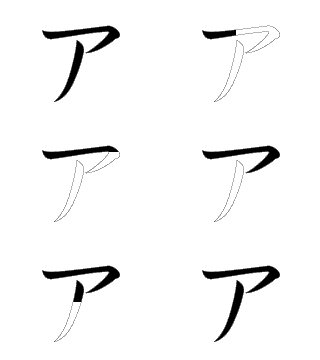
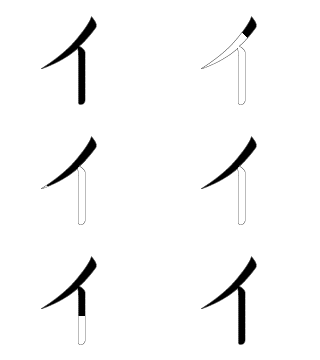
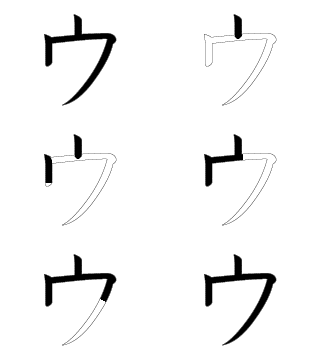
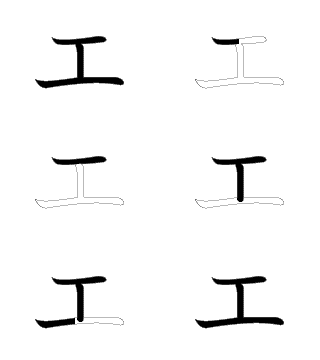
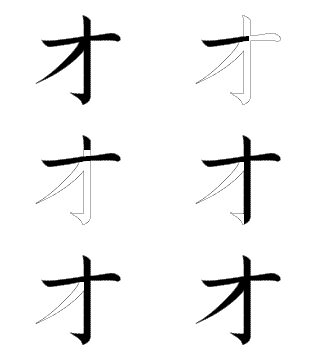
- Tip: ア (A) looks like a tilted “T” with an extra stroke. エ (E) looks like an I-beam.
Row KA (K-series)
Unvoiced K sounds. Add dakuten (two dots) to get G (ga, gi, gu, ge, go).
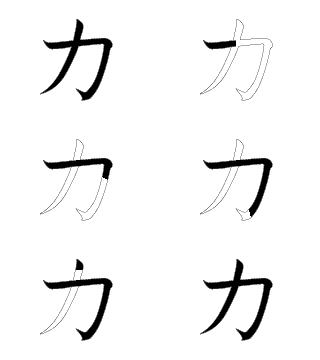
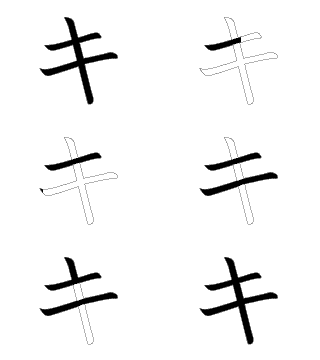
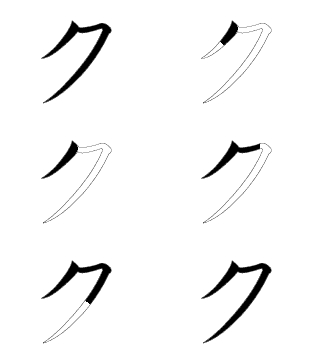
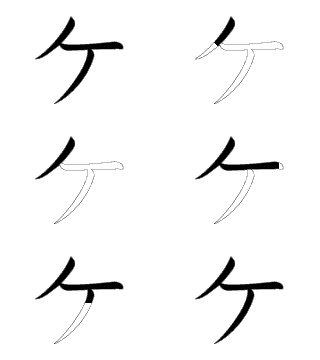
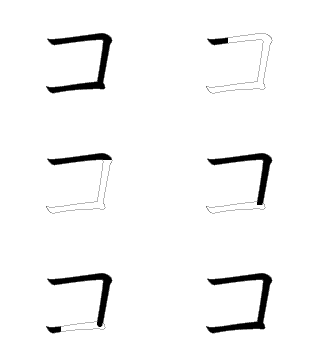
- Note: カ (Ka) closely resembles the kanji for strength (力 — chikara).
- ク (Ku) looks like a 7 with a tail.
Row SA (S-series)
Add dakuten for Z sounds (za, ji, zu, ze, zo).
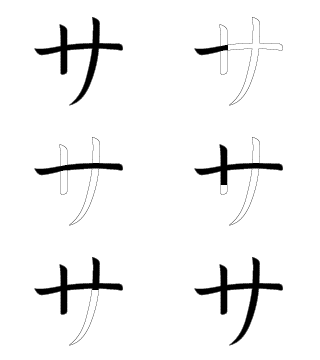
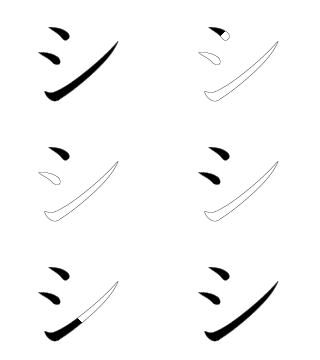
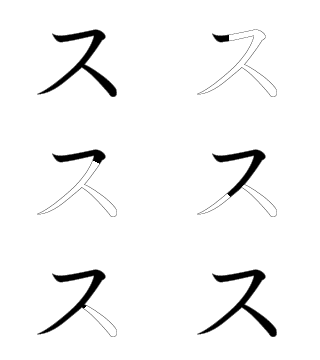
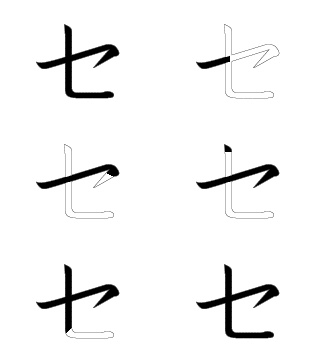
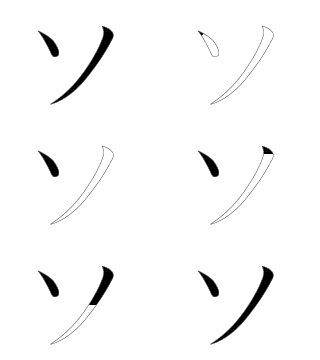
- Important: On シ (Shi), the short strokes are more horizontal (or gently slanted), and the long stroke pulls upward. That is the key difference from tsu (ツ).
Row TA (T-series)
Add dakuten for D sounds (da, ji, zu, de, do).
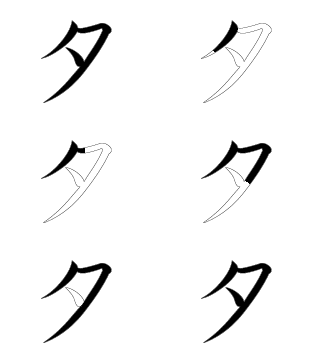
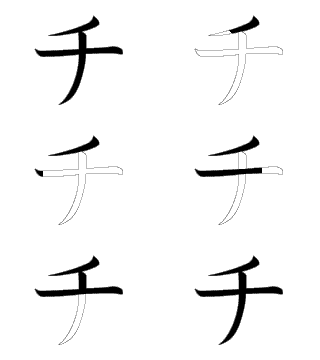
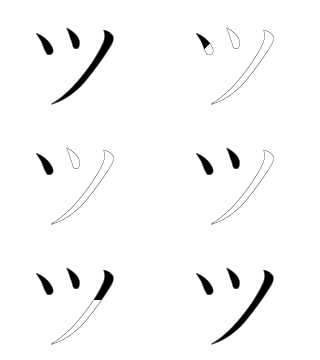
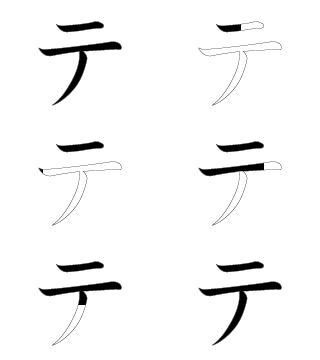
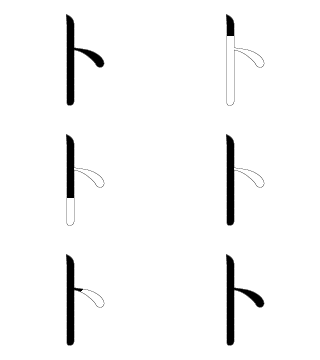
- Important: On ツ (Tsu), the short strokes point downward, and the long stroke pulls top to bottom.
Row NA (N-series)
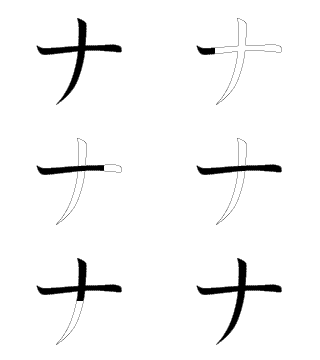
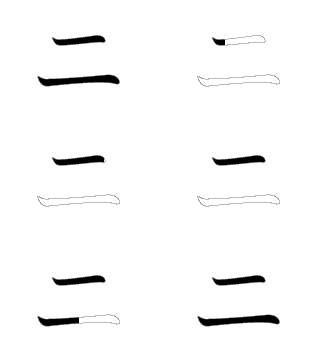
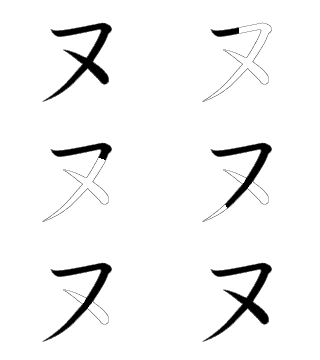
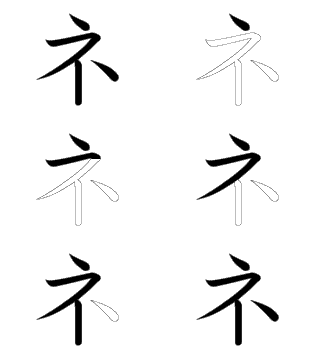
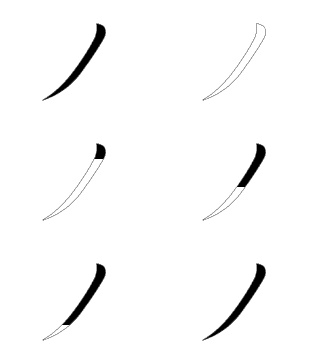
- Tip: ニ (Ni) is just two lines—the same idea as the kanji for “two.” ノ (No) is a single diagonal stroke.
Row HA (H-series)
Add dakuten for B (ba, bi, bu, be, bo).
Add handakuten (a small circle) for P (pa, pi, pu, pe, po).
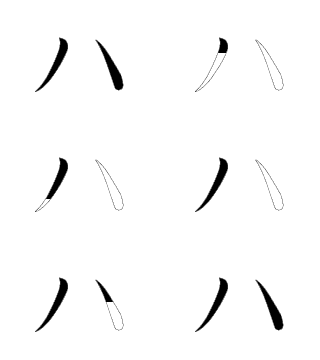
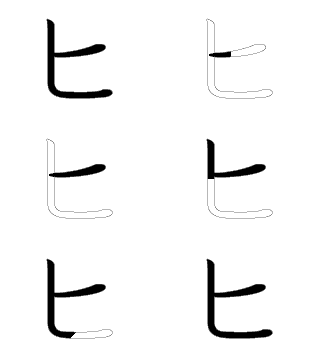
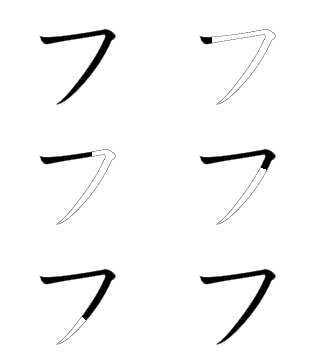
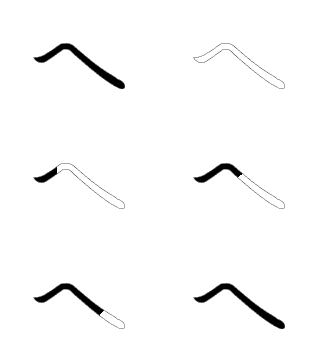
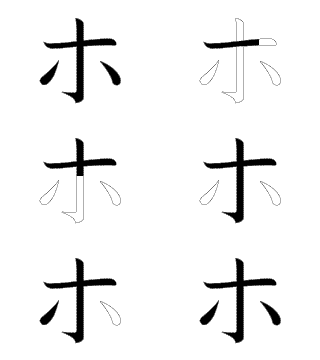
- Tip: ハ (Ha) looks like a basic roof or a wide moustache. ヘ (He) matches hiragana he, only stiffer.
Row MA (M-series)
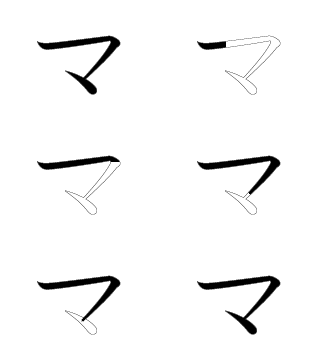
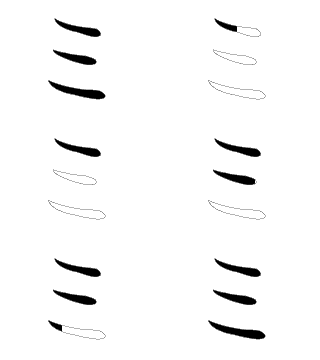
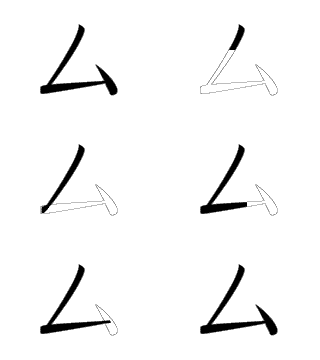
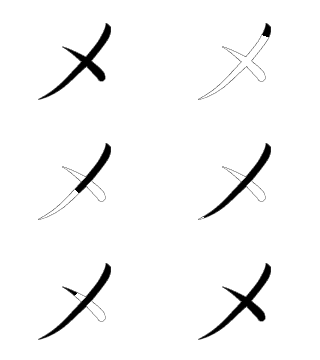
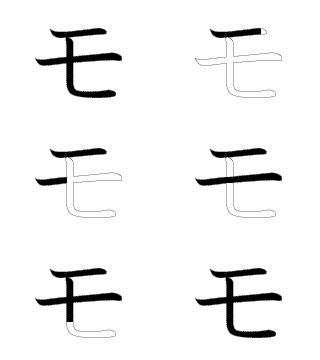
- Tip: ム (Mu) is a triangle with one side open. モ (Mo) is like hiragana mo without the top hook.
Row YA (Y-series)
Only three: ya, yu, yo.
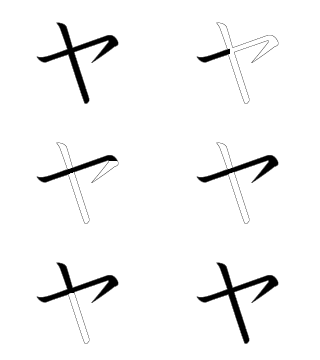
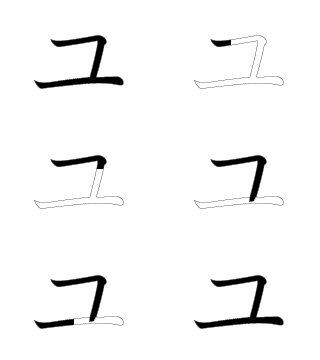
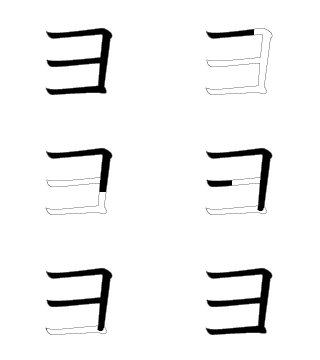
- Tip: ヨ (Yo) looks like a backward “E” or a comb.
Row RA (R-series)
Japanese “R” sits between L and R.
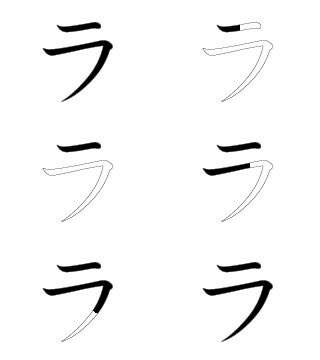
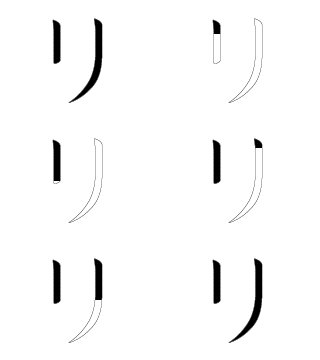
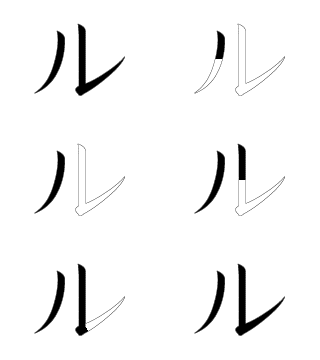
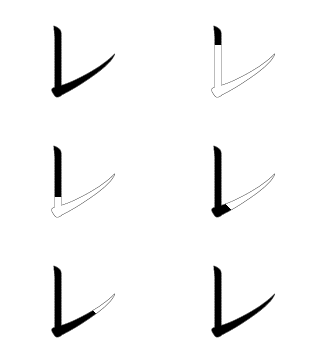
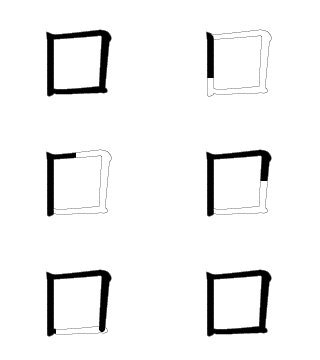
- Tip: ロ (Ro) is a clean box—the same shape as the kanji for “mouth” (kuchi).
Row WA & N
Modern standard Japanese keeps two W sounds, wa and wo, plus the nasal n.
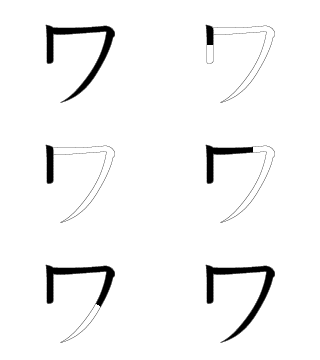
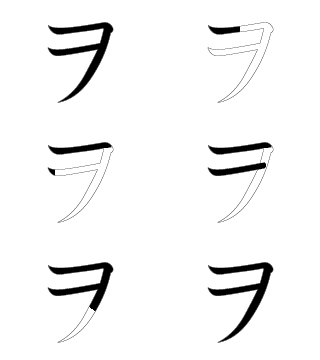
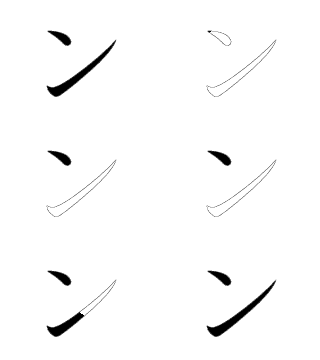
- Note: ン (N) is easy to confuse with ソ (So). On n, the short stroke is flatter and the long stroke pulls upward.
Historic letters (Wi & We)
You may still see these in older manga or certain brand names.
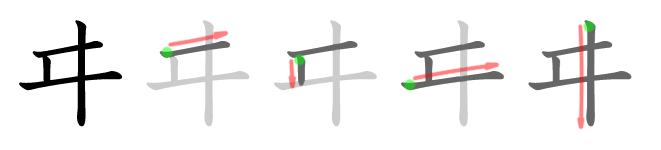
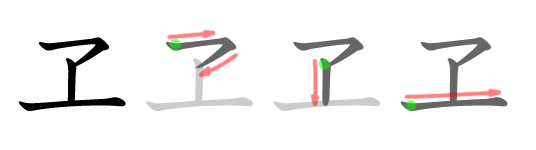
Wi (ヰ) and We (ヱ) left the standard orthography in the 1946 spelling reform. You can still meet them in brand writing such as “Yebisu” beer (ヱビス, read Ebisu) or older comedy names.
For modern “wi” and “we,” use small-vowel combinations:
- Wi = ウィ (large u + small i)
- We = ウェ (large u + small e)
Example — “Microsoft Windows”:
- Modern: マイクロソフト・ウィンドウズ
- Historic (with ヰ): マイクロソフト・ヰンドウズ
4. Key Point: Look-Alike Letters
This is the biggest hurdle for new katakana learners. Four letters get mixed constantly—the classic shi–tsu–so–n problem.
Group 1: Shi (シ) vs Tsu (ツ)
Think of the short strokes as “eyes” on a tilted smile.
- Shi (シ): Eyes sit more horizontally. The long stroke (“mouth”) pulls bottom to top. Memory hook: she looks up.
- Tsu (ツ): Eyes stack more vertically. The long stroke pulls top to bottom. Memory hook: tsunami comes down.
Group 2: So (ソ) vs N (ン)
- So (ソ): One short stroke (steeper). The long stroke pulls top to bottom.
- N (ン): One short stroke (flatter). The long stroke pulls bottom to top.
5. Practice: Reading Loanwords
Try reading these everyday loanwords used in Japan.
| Katakana | Romaji | Source | Meaning |
|---|---|---|---|
| テレビ | Terebi | Television (English) | Television |
| パン | Pan | Pão (Portuguese) | Bread |
| アルバイト | Arubaito | Arbeit (German) | Part-time job |
| スマホ | Sumaho | Smartphone (English) | Smartphone |
| マクドナルド | Makudonarudo | McDonald's | McDonald's |
| スターバックス | Sutaabakkusu | Starbucks | Starbucks |
6. Interactive Practice
Time to test yourself. Use the practice tool below to train katakana reading and writing.
You can also open kana practice in Labs: Hiragana/Katakana practice.
Closing
Learning to write katakana is motor practice—muscle memory. Do not only stare at the charts. Take paper and pen. Write each letter 10–20 times while saying the sound out loud.
When the basic shapes feel comfortable, continue with Learn Katakana for usage rules such as long vowels (chōonpu) and double consonants.
Keep practicing! Ganbatte kudasai! 🎌
Previous: ← Learn Katakana
Next: Understanding Okurigana →