
Introduction: Why Japanese Is Unique (a Beginner's Guide)
Welcome to the world of Japanese. Before you dive into writing systems and grammar, it helps to pause on the shore and get a feel for the ocean you are about to cross.
Many people say Japanese is hard. That is partly true—especially the writing system. Other parts are simpler than English or even Indonesian: pronunciation is very straightforward, and grammar is regular with few exceptions.
This article gives you a bird's-eye view of what makes Japanese unique, interesting, and worth learning.
1. Main Features of Japanese
What sets Japanese apart from other languages?
A. SOV Structure (Subject–Object–Verb)
In Indonesian or English (SVO), we say: "Budi eats an apple." In Japanese, the order is: "Budi apple eats."
- 私はリンゴを食べます。 (Watashi wa ringo o tabemasu). (I - apple - eat).
The verb or predicate always comes at the end. You often need to hear the whole sentence to know whether someone eats an apple, does not eat an apple, wants to eat an apple, or already ate one. Key information arrives last.
B. A High-Context Language
Japanese relies heavily on shared context. When speaker and listener already know who is being talked about, the subject is often dropped.
- Question: "Eat?" (Tabemasu ka?)
- Answer: "Eat." (Tabemasu.) You do not need "Are you eating?" / "Yes, I am eating." The predicate alone is enough.
C. Levels of Politeness (Keigo 敬語)
Japanese reflects social hierarchy. How you speak with close friends (casual), with a boss (polite), and with honored guests (honorific/humble) can differ a lot.
- Eat (Casual): 食べる (Taberu)
- Eat (Polite): 食べます (Tabemasu)
- Eat (Humble): 頂きます (Itadakimasu)
- Eat (Honorific): 召し上がります (Meshiagarimasu)
Do not worry—beginners only need the polite forms (desu/masu) at first.
2. Writing System: A Trio of Scripts
This is the biggest challenge in Japanese. Three scripts appear in a single sentence!
- Hiragana (ひらがな): Native Japanese script. Curved shapes. Used for particles and verb endings.
- Katakana (カタカナ): Script for foreign words. Angular shapes. Used for loanwords (for example koohii for coffee).
- Kanji (漢字): Chinese characters. Used for nouns and verb/adjective stems. They carry meaning.
Mixed sentence example: 私はテレビを見ます。 (Watashi wa terebi o mimasu)
- 私 (I) & 見 (see/watch) = Kanji (core meaning).
- は, を, ます = Hiragana (grammar) — blue.
- テレビ (TV) = Katakana (loanword) — bold.
Why kanji matters: Japanese has a limited set of sounds, so many words sound alike but mean different things (homophones). Example: "kappa" can mean a raincoat (合羽) or a turtle-like creature (河童) in Japanese folklore. Without kanji, readers get confused.
3. Pronunciation: Simple and Clear
Good news: Japanese pronunciation is easy for many Indonesian speakers. Japanese has only five pure vowels:
- A (as in father)
- I (as in see)
- U (as in food)
- E (as in get) — not a schwa-like reduced vowel
- O (as in go)
There is no English th, and no French-style eu. Each syllable is spoken with a clear beat of similar length.
Pitch Accent
Vowels are simple, but Japanese has rising and falling “music” called pitch accent. Different pitch can mean different words, even with the same spelling.
- 箸 Hashi (High–Low) = chopsticks.
- 橋 Hashi (Low–High) = bridge. Don’t obsess over this at the start—context usually helps enough.
4. Basic Greetings (Aisatsu 挨拶)
Greetings matter a lot in Japanese culture. Using them well is a basic mark of politeness.
Meeting people
-
お早う御座います (Ohayou Gozaimasu) Good morning — roughly until about 10–11 a.m.
-
こんにちは (Konnichiwa) Hello / Good afternoon — the usual greeting while the sun is up.
-
こんばんは (Konbanwa) Good evening — after sunset.
Thanks and sorry
-
有難う御座います (Arigatou Gozaimasu) Thank you.
-
済みません (Sumimasen) Excuse me / Sorry — a flexible word for calling a waiter, apologizing for a bump, or politely getting someone’s attention before you ask the way.
Parting
-
左様なら (Sayonara) Goodbye — careful: this often sounds like a long goodbye. Do not use it with classmates or coworkers you will see again tomorrow.
-
じゃあ、また (Jaa, mata) See you later — more common in daily life.
-
お疲れ様です (Otsukaresama desu) Thanks for your hard work — the standard workplace parting among colleagues.
5. Myths vs Facts about Learning Japanese
Myth: "Kanji is impossible—there are thousands!" Fact: Everyday Japanese uses about 2,136 characters (2010 standard), the Jōyō Kanji (常用漢字)—"kanji for daily use."
Yes, two thousand. Japanese people do not memorize them all at birth either. They learn them over many years:
- 1,006 kanji in elementary school (6 years).
- 1,130 kanji in junior high and high school.
And remember: many Indonesians already live with more than one language—regional language plus Indonesian, often plus English. Compared with mostly monolingual environments, a multilingual brain is already trained to take in a new language.
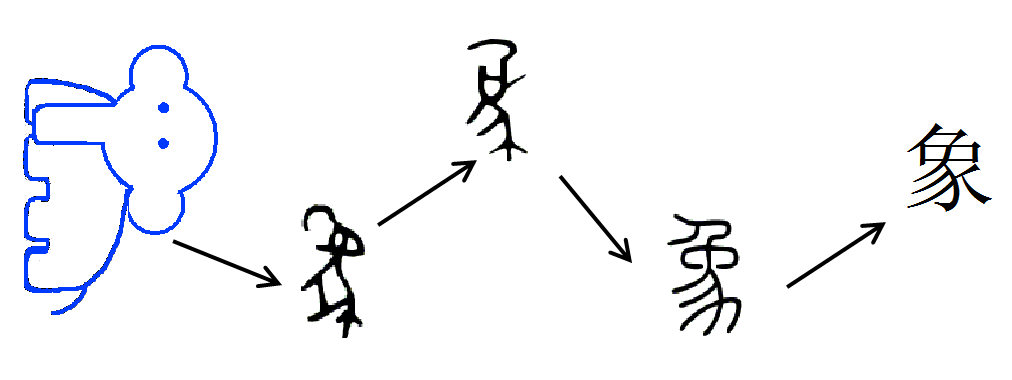
Kanji is logical. Characters are built from smaller parts (radicals). If you know the “water” radical and the “eye” radical, you can guess “tear” (namida 涙). The first 100 kanji already cover about 30–40% of everyday text.
Myth: "Grammar is extremely hard." Fact: Japanese grammar is quite regular and almost mathematical. There are far fewer exceptions than in English (where go becomes went, buy becomes bought). Verb conjugations follow clear patterns.
Like Indonesian, Japanese does not force singular/plural the way some languages do. Arabic is much more complex—singular, plural, and dual, plus masculine and feminine gender on nouns. Japanese has no grammatical gender system at all.
Myth: "I must master English first." Fact: No. Indonesian word order (SVO) differs from Japanese (SOV), but Indonesian sounds are closer to Japanese than English is. Indonesian learners often develop clearer Japanese pronunciation than native English speakers do.
6. How Should You Start?
Do not try to learn everything at once. Follow a simple roadmap:
- Weeks 1–2: Memorize hiragana and katakana. Do not delay this. It is your entry ticket.
- Weeks 3–4: Learn basic grammar (particles wa, ga, o) and simple sentences (A is B).
- Week 5+: Add kanji (about five a day) and build vocabulary.
The key is consistency. Japanese is a marathon, not a sprint. Fifteen minutes every day for a year will take you farther than five hours once, followed by a month off.
Ready to begin? Continue with the first article: Learn Hiragana.
Every expert was once a beginner. Do not fear mistakes—they are part of learning. Enjoy each “aha” moment when you read a full sentence or understand a line from your favorite anime. A journey of a thousand miles begins with one step.
Ganbatte kudasai! (Do your best!)
Previous article: ← Time of Day in Japanese
Next article: How to Introduce Yourself in Japanese →